
5 PM. The toddler’s clinging to your leg, dinner isn’t started, and you’re fresh out of ideas. We’ve all been there. As a mum of two and an early childhood educator, these are my secret-weapon, zero-cost homemade toddler toys that save the day and secretly build your toddler’s brain. Let’s be honest, we don’t always have time for elaborate setups. These 20 educator-approved ideas are simple, use items you already have, and are powerful tools for learning.
1. The 5-Minute Sanity Saver: A Sensory Station
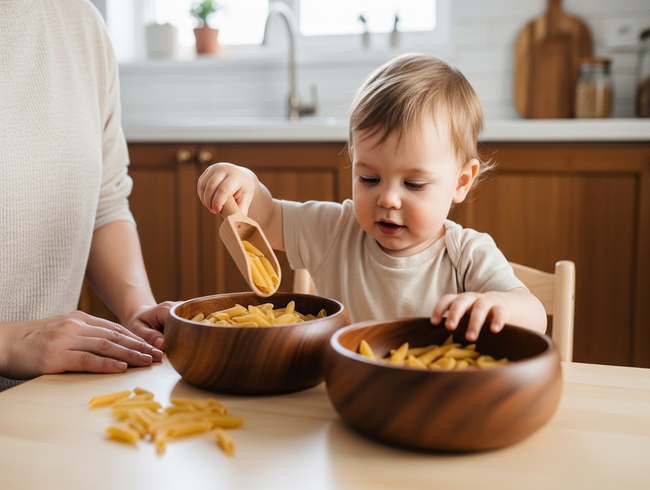
This simple setup fosters independent play, giving you a much-needed moment to breathe. A rookie mistake many of us make is thinking learning tools need to be expensive. In reality, simple pantry items like uncooked pasta, rice, or a basin of water are incredible brain-building resources. For example, give your toddler two bowls and a scoop, and let them transfer dry pasta from one to the other. This single action develops fine motor skills, hand-eye coordination, and an early understanding of volume. This type of self-directed exploration supports key toddler development milestones and directly links to EYLF Outcome 4, helping children become ‘confident and involved learners’.
2. The Unclutterer: ‘Thinking Toys’ from the Recycling Bin
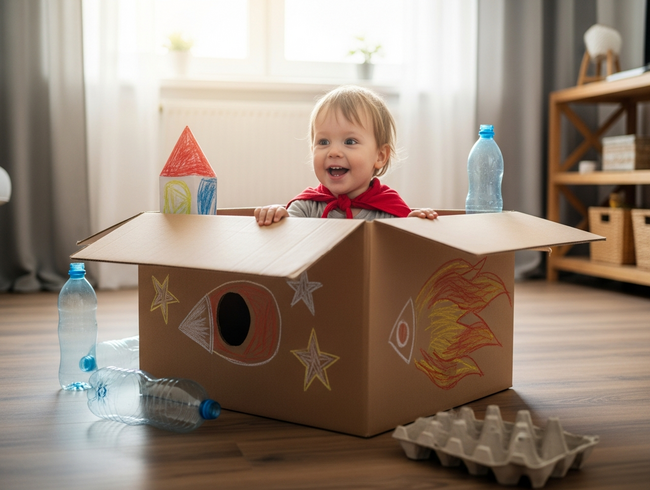
Using recycled materials builds superior problem-solving and creative skills compared to single-use toys. An empty cardboard box, a plastic bottle, and some egg cartons aren’t rubbish; they’re the raw materials for innovation. This isn’t just about ‘making a craft’; it’s about providing open-ended props to fuel their imagination. A large box can become a rocket ship to the moon, a race car, or a cosy fort, prompting rich storytelling and dramatic play. This type of open-ended play is a cornerstone of EYLF Outcome 5, helping your child become an ‘effective communicator’ through role-playing and vocabulary development.
3. The Energy Burner: Indoor Gross Motor Games
After all that quiet concentration, it’s time to get the wiggles out. These simple indoor toddler activities help little ones regulate their bodies, which is crucial for managing big emotions and improving sleep. You don’t need a huge backyard to develop gross motor skills. A strip of masking tape on the floor instantly becomes a balance beam for careful walking. Or, you can call out different animals and have your toddler move across the room like them—a bear crawl, a frog hop, a penguin waddle. This builds core strength and coordination, supporting EYLF Outcome 3, where ‘Children have a strong sense of wellbeing’.
Insider Tip: To add another layer of challenge and fun, place pillows or cushions along the ‘animal walk’ path. This encourages problem-solving and enhances their body awareness as they navigate how to safely climb over the obstacles.
4. The Future Writer: A Simple ‘Posting’ Box
This activity is a fantastic way to develop the pincer grasp and hand-eye coordination needed for future writing. All you need is an empty container (like a formula tin or tissue box) and something small to post through a slot you cut in the lid. Paddle pop sticks, large buttons, or even playing cards work perfectly. The repetitive motion of picking up an object and manoeuvring it into the slot is deeply engaging for toddlers. They are learning about object permanence (‘where did it go?’) and cause and effect. This is a brilliant, zero-cost way to promote concentration and persistence.
5. The Conversation Starter: DIY Sock Puppets
Bring stories to life and encourage communication with puppets you can make in seconds. A simple sock pulled over your hand can become a character with its own voice and personality. You don’t need to add googly eyes or wool hair—your toddler’s imagination will fill in the blanks. Use the puppet to ask them questions, sing songs, or act out a favourite book. This encourages back-and-forth conversation, helps them practise different tones of voice, and builds their confidence as communicators (EYLF Outcome 5). The one thing that saved my sanity during the ‘why’ phase was letting the puppet answer some questions!
6. The Little Scientist: A Water Pouring Station
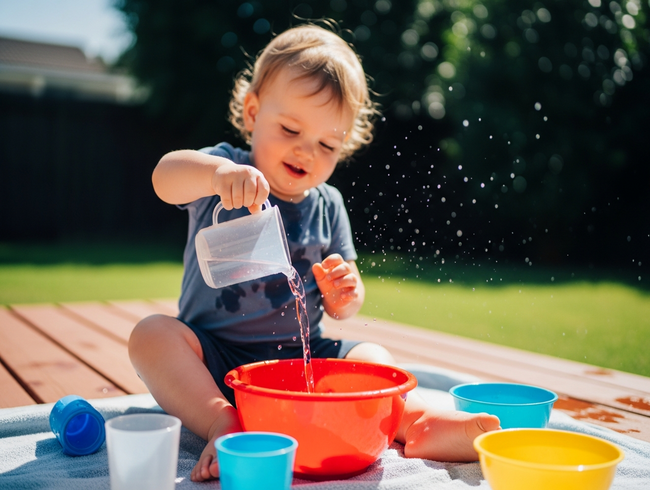
Develop concentration and an early understanding of physics (volume, gravity) with the magic of water. Set your toddler up outside or on a towel indoors with a few different-sized plastic jugs, cups, and bowls. Let them simply pour water from one container to another. They will be fascinated by the process, observing how water flows and fills different shapes. This is one of the most effective sensory play ideas for calming a fussy child. It’s a hands-on experiment that teaches scientific concepts in the most natural, play-based way, nurturing them as an ‘involved learner’ (EYLF Outcome 4).
7. The Focus Builder: Pasta Threading Practice
Strengthen hand-eye coordination and fine motor control with a simple threading activity. You don’t need special beads. Large, tube-shaped pasta like penne or rigatoni and a shoelace or piece of string are all that’s required. Show your toddler how to push the string through the pasta hole to create a necklace or a wriggly snake. This requires immense concentration and dexterity, building the small muscles in their hands. It’s a quiet, focused activity that is perfect for winding down before nap time and is another excellent example of using zero cost kids activities to support development.
8. The First Step to Sorting: A Colour Hunt
Introduce colour recognition and sorting skills without any prep at all. Simply give your toddler a colour, like ‘blue’, and a bucket or a bag. Then, send them on a mission to find as many blue things as they can around the house—a blue block, a blue sock, a blue book. This turns learning into a fun, physical game. As they collect the items, you can name them together, expanding their vocabulary. This activity encourages observation skills and the ability to categorise, which are foundational skills for mathematics and literacy, aligning with EYLF at home.
9. The World Builder: An Epic Blanket Fort
Foster imagination, spatial awareness, and cooperative play by building a classic fort. Drape blankets or sheets over a few chairs or the sofa to create a secret hideaway. This simple act of construction is a powerful learning experience. Your toddler is problem-solving how to make the walls stay up and learning about space and structure. Once inside, the fort becomes a new world—a cave, a castle, a clubhouse. It provides a safe, cosy space that supports imaginative play and gives them a sense of ownership over their environment.
10. The Noise Maker: A Kitchen Utensil Band
Explore sound, rhythm, and creative expression with items from your kitchen drawers. Let’s be honest, toddlers are going to raid the cupboards anyway, so we might as well make it a learning opportunity! Provide a few pots and pans (as drums) and some wooden spoons or whisks (as drumsticks) and let them make some noise. You can tap out simple rhythms for them to copy or put on some music to play along to. This is a wonderful sensory experience that helps them explore cause and effect (‘When I hit this, it makes a loud sound!’) and express themselves creatively.
11. The Problem Solver: Cereal Box Puzzles
Promote problem-solving skills and visual recognition with a homemade puzzle. Simply take the front panel of an empty cereal box or a similar piece of cardboard with a clear picture. Cut it into a few large, simple pieces—two or three for a younger toddler, maybe four or five for an older one. Jumble the pieces and show them how to put the picture back together. This teaches them to pay attention to details, shapes, and colours. It’s a fantastic way to build persistence and gives them a huge sense of accomplishment when they solve it.
12. The Little Helper: A ‘Toy Washing’ Station
Combine sensory play with practical life skills by creating a station for washing toys. All you need is a basin of bubbly water, a sponge or cloth, and some waterproof toys (like plastic animals or blocks). Your toddler will love the process of scrubbing, rinsing, and drying their toys on a towel. This activity not only develops their fine motor skills but also teaches them about sequencing and taking care of their belongings. It’s one of my favourite DIY toddler activities because it feels like a grown-up job, which empowers them and builds their sense of responsibility (EYLF Outcome 2).
13. The Muscle Builder: ‘Tape Rescue’ Game
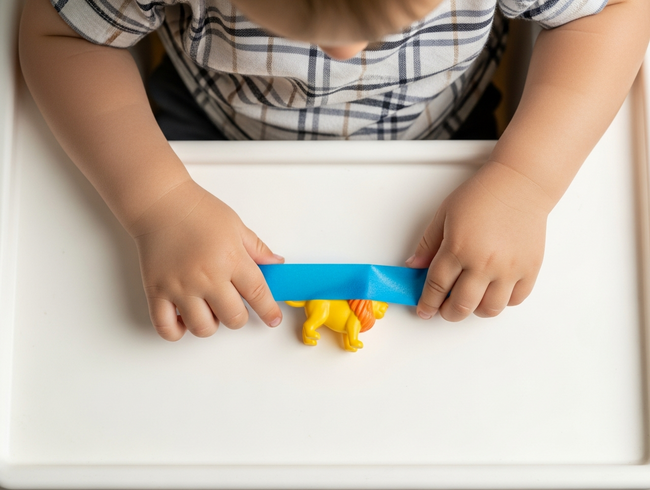
Build hand strength and problem-solving skills with this incredibly simple and engaging activity. Use masking tape or painter’s tape to stick a few small, lightweight toys (like animal figurines or large blocks) to a tray, highchair table, or the floor. The challenge for your toddler is to peel the tape off to ‘rescue’ their toys. This requires them to use their pincer grasp and apply focused effort, which is fantastic for strengthening the small muscles in their hands. It’s a quiet and captivating game that can keep them busy while you get a task done nearby.
14. The No-Mess Artist: Painting with Water
Unleash their creativity with zero mess and zero cost. The one thing that saved my sanity on warm days was this simple trick. Give your toddler a paintbrush and a bucket of water and let them ‘paint’ on the pavement, a brick wall, or a fence. They will be mesmerised as they watch the dark marks appear and then slowly disappear as the water evaporates. This introduces them to the concept of impermanence in a tangible way. It’s a wonderful, calming outdoor activity that allows for big, expressive movements without any worry about cleaning up paint spills.
15. The Sensory Detective: A ‘Feeling Bag’
Develop your toddler’s sense of touch and descriptive language with a mystery sensory bag. Place a few common household objects with different textures into an opaque bag or pillowcase—a soft sock, a bumpy pinecone, a smooth stone, a crinkly piece of foil. Have your toddler reach inside without looking and describe what they feel. Is it soft? Hard? Bumpy? Can they guess what it is? This game sharpens their sensory awareness and builds their vocabulary, helping them become more effective communicators (EYLF Outcome 5).
16. The Life Skills Lesson: Matching Socks
Turn a household chore into a fun cognitive game. When you have a pile of clean laundry, pull out all the socks and put them in a heap. Sit with your toddler and turn it into a matching game. Pick up one sock and ask them to find its partner. This is a practical way to teach matching, which is a key pre-maths skill. It helps them recognise patterns, colours, and sizes. They’ll be so proud to be helping with a real family job, which boosts their sense of contribution and belonging (EYLF Outcome 2).
17. The Budding Engineer: Tin Can Towers
Develop engineering skills and spatial awareness using items from your pantry. A collection of food tins, plastic containers, and small boxes make for fantastic, unconventional building blocks. Because they are all different shapes, sizes, and weights, your toddler has to think critically about how to stack them so they don’t fall over. Which ones make a good base? What happens if you put a small tin on top of a big one? This kind of open-ended construction play encourages experimentation and resilience when their towers tumble.
18. The Nature Explorer: A Treasure Basket
Encourage a connection with the natural world and stimulate the senses with found objects. On your next walk or just in the backyard, help your toddler collect interesting natural treasures in a small basket or box. Look for things with different textures, smells, and shapes—a smooth, grey stone; a rough piece of bark; a fragrant flower; a crunchy, dry leaf. Back inside, you can explore the treasures together, talking about how they feel, smell, and look. This fosters curiosity and a respect for the environment (EYLF Outcome 2).
19. The Bedtime Wind-Down: Shadow Puppet Theatre
Spark imagination and storytelling skills with the simple magic of light and shadow. In a dimly lit room, use a torch or a lamp to cast light on a plain wall. Show your toddler how to make hand shapes in the light to create shadows. You can make a simple bird, a dog, or a rabbit. Create a story together about the shadow characters. This is a wonderfully calming activity for bedtime that encourages creativity and visual tracking. It’s a beautiful way to connect and wind down at the end of a busy day.
20. The Vertical Canvas: Sticky Contact Paper Art
Provide a mess-free canvas for creative expression and fine motor work. Cut a piece of clear contact paper and tape it to a wall or window with the sticky side facing out. Give your toddler a collection of light materials—scraps of paper, pom-poms, cotton balls, pieces of ribbon, or leaves from the garden. They can stick the items onto the contact paper to create a temporary, vertical collage. This encourages them to use the small muscles in their hands and experiment with composition, colour, and texture in a completely new way.
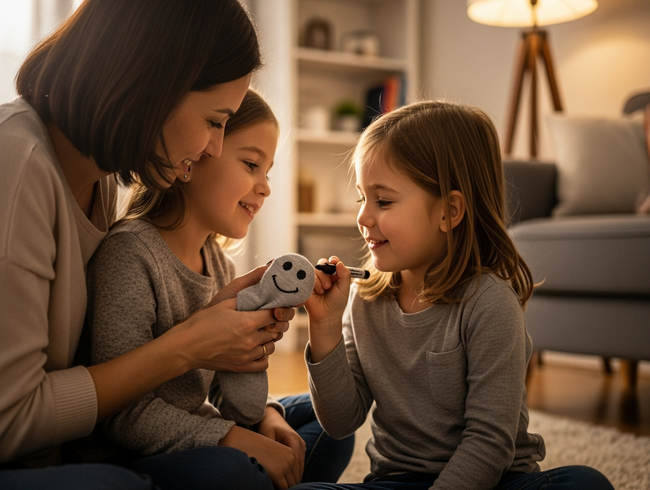
Meaningful, brain-building play doesn’t require money, extensive prep, or special toys. By using the everyday items you already have, you are being a resourceful, responsive, and incredibly effective educator for your child. You’re giving them exactly what they need to thrive.
Love these simple, powerful learning ideas? This is just a glimpse of our play-based, inquiry-led approach. To see how we turn discovery into learning every day at our Springvale centre, we invite you to book a tour. Contact True Maple Bilingual Early Learning Centre today at 03 7504 3524 or to feel the difference for yourself.