
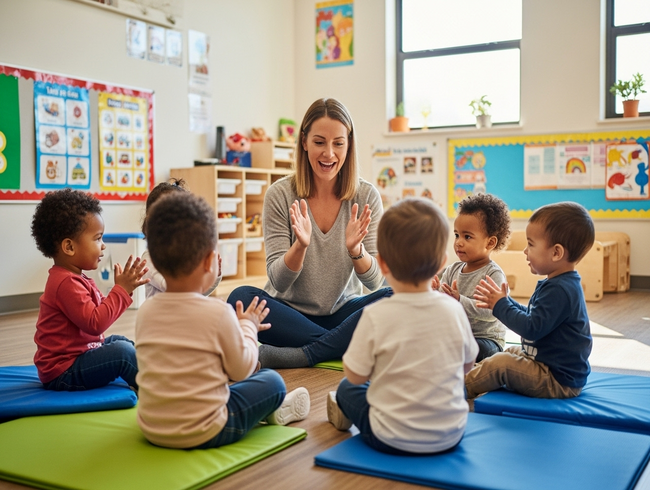
Picture this: it’s 3:30pm, I’ve got twelve energetic toddlers who’ve just woken up from rest time, and the room feels like a ticking time bomb. Then I start our “Wake Up and Wiggle” song, and within thirty seconds, I’ve got cooperative children ready for afternoon activities instead of chaos. Trust me, after five years in the toddler room, I’ve learned that music movement early childhood isn’t just fun—it’s my secret weapon for turning potentially explosive moments into magical learning opportunities.
You’re about to discover five specific ways music and movement completely transform children’s daily experiences, creating smoother transitions, better cooperation, and genuine developmental leaps that you can see happening right before your eyes.
1. Cleanup Songs Turn Daily Battles Into Eager Participation
The biggest transformation I witness daily is how cleanup songs eliminate the dreaded tidy-up struggles that exhaust parents and children alike. When children hear their familiar cleanup melody, their brains automatically shift into cooperation mode because the musical cue creates a predictable, stress-free routine they can anticipate and control.
In our toddler room, we use “Clean up, clean up, everybody everywhere” with accompanying clapping beats, and I watch children literally race to put toys away—sometimes even interrupting their play to start cleaning before the song finishes! The rhythm creates a game-like atmosphere that makes the mundane task genuinely enjoyable rather than a chore to resist.
This same magic works beautifully at home too, reducing those daily power struggles that leave everyone feeling frustrated.
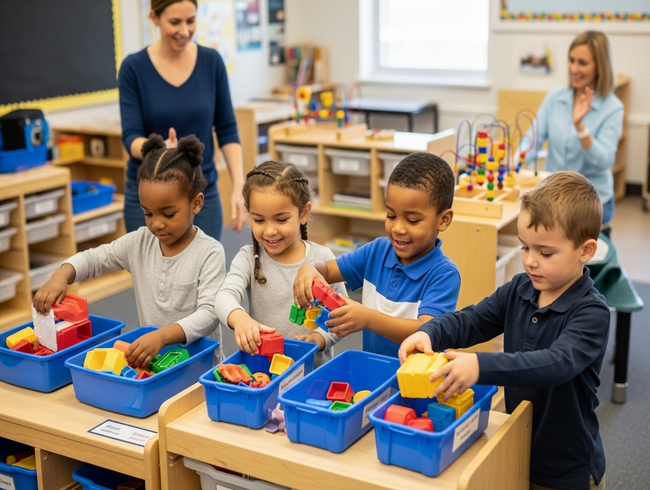
2. Simple Dancing Games Secretly Build Academic Brain Skills
What looks like “just dancing around” is actually sophisticated cognitive development disguised as play. When children follow movement patterns to music, they’re simultaneously developing sequencing abilities, memory skills, spatial awareness, and executive function—all critical foundations for literacy and numeracy later on.
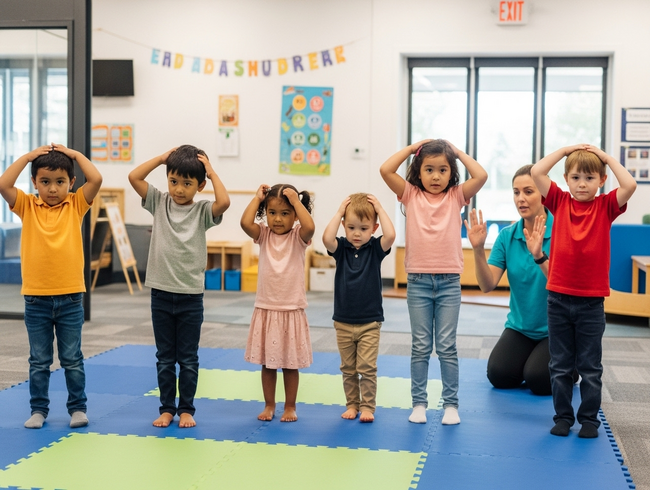
Take our favourite “Head, Shoulders, Knees and Toes” with directional changes—children must remember the sequence, coordinate their bodies, listen for tempo changes, and follow multi-step instructions all at once. These are the exact same mental processes they’ll use for reading comprehension and mathematical problem-solving in school.
Pro Tip: Watch for children who initially struggle with movement sequences but gradually improve. This visible progress in body coordination directly correlates with developing cognitive organisation skills you’ll notice in their problem-solving and communication at home.
Moving from brain development to communication skills, the connection between movement and language acquisition is equally remarkable.
3. Musical Activities Accelerate Language Development for Every Child
Musical activities create the perfect conditions for rapid vocabulary growth and communication confidence, especially valuable for our multilingual families where children are navigating multiple languages simultaneously. The repetition, rhythm, and rhyme in songs help embed new words into long-term memory much faster than traditional conversation alone.
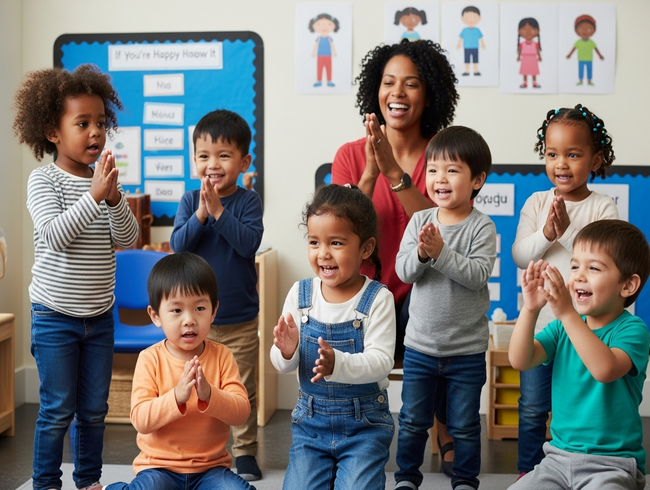
In our morning circle, we sing “If You’re Happy and You Know It” with emotion words—”If you’re excited and you know it, jump around!” I consistently see children who rarely speak suddenly belting out these lyrics and then using those emotion words spontaneously throughout the day. The musical structure gives them a safe, predictable way to practice new vocabulary without fear of making mistakes.
The research shows measurable language development gains within just weeks of consistent musical language activities, making it one of the most effective tools in early childhood education.
4. Group Movement Activities Build Emotional Intelligence Naturally
Beyond individual development, group movement activities create authentic opportunities for children to practice sharing space, taking turns, managing disappointment, and celebrating others’ successes—skills that directly translate to improved behaviour and confidence in all social situations.
During our “Musical Statues” game, children must regulate their impulses when the music stops, wait patiently while others have turns being the “statue checker,” and learn to handle the disappointment of being “out” while still enjoying others’ participation. These moments teach emotional regulation and empathy in ways that adult explanations simply cannot achieve.
A little secret from the toddler room: the children who struggle most with tantrums and social conflicts show the fastest improvement when they participate regularly in these structured group movement experiences.
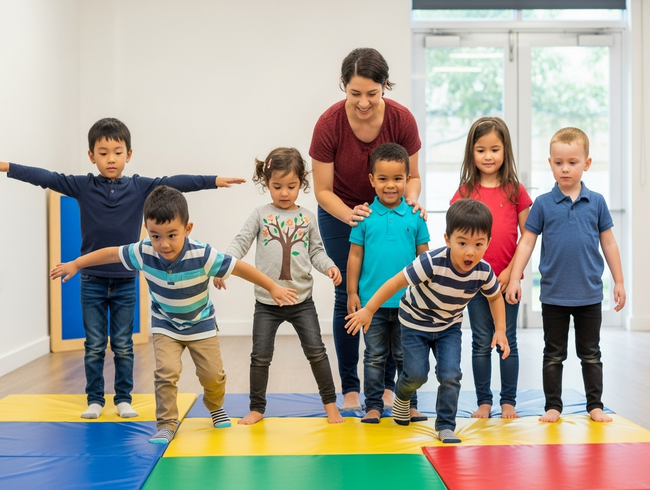
5. Movement Breaks Transform Energy Management Throughout the Day
Strategic movement breaks prevent energy buildup that leads to meltdowns, helping children naturally develop self-regulation skills that create calmer, more focused learning periods throughout their day. Instead of suppressing children’s natural need to move, we channel it purposefully to support their attention and emotional stability.
When I notice restless energy building during quiet activities, we’ll do “Shake Your Sillies Out”—children shake their hands, then feet, then whole bodies, followed by three deep breaths. This two-minute activity completely resets the room’s energy, allowing children to return to focused play with renewed attention spans.
These same transition techniques work brilliantly at home, turning potentially difficult moments between activities into opportunities for connection and cooperation instead of power struggles.
Ready to See the Transformation?
When music and movement are thoughtfully integrated into children’s daily routines, you’ll witness remarkable changes in cooperation, communication, and confidence that ripple through every aspect of their development.
Ready to see how our integrated approach to music and movement can transform your child’s day? Contact True Maple Bilingual Early Learning Centre today at 03 7504 3524 or springvale@truemaple.com.au to Book a Tour and experience our practical, educator-tested methods that deliver real results without the juggling.