
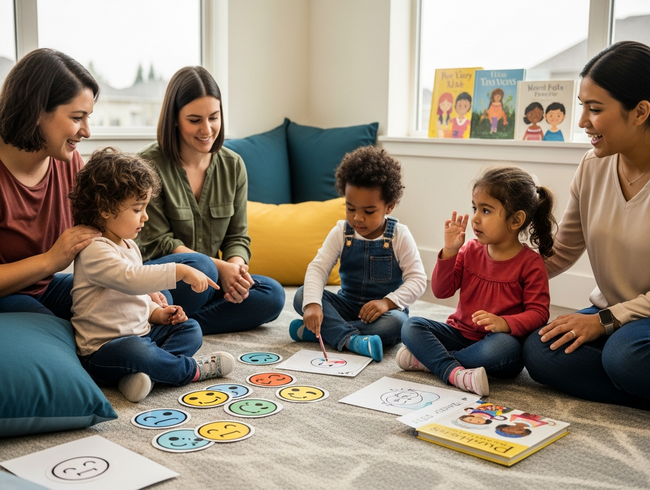
I’ve seen too many wonderful children labelled as ‘difficult’ simply because their emotional expressions didn’t fit the typical mould. Every child deserves to have their feelings understood and validated – and you can be their greatest emotional teacher. When we focus on children emotional literacy through inclusive approaches, we honour each child’s unique way of experiencing and expressing emotions.
The Problem: Why Traditional Emotional Teaching Falls Short for Many Children
I understand your frustration when standard emotional advice doesn’t work for your child. You’ve tried the typical strategies – emotion wheels, deep breathing exercises, or simple “use your words” approaches – yet your child still struggles to express their feelings appropriately.
Traditional emotional education often follows a one-size-fits-all model that can leave behind children with different learning styles, communication abilities, or cultural backgrounds. Research shows that up to 40% of children are mislabelled as having behavioural difficulties when their emotional expressions simply don’t align with conventional expectations.
Every child learns differently, and our goal is to create a flexible environment that honours that. Whether your child is highly sensitive, energetic, non-verbal, or processes emotions through movement rather than words, they absolutely have the capacity for emotional growth when approached with understanding and adaptation.
Overview: What You’ll Accomplish and What You Need to Know
Through this guide, you’ll learn to create an emotion-rich environment tailored to your child’s needs, adapt teaching techniques for their specific communication style, build emotional vocabulary through everyday moments, and support their unique regulation patterns.
This approach works beautifully for children who are non-verbal, have processing differences, speak multiple languages at home, or express emotions through behaviour rather than words. We partner closely with families and allied health professionals to ensure every strategy respects your child’s individual development path.
What you’ll need to start:
- Willingness to observe your child’s unique emotional patterns without judgement
- Commitment to 15-20 minutes of daily practice
- Openness to trying different approaches until you find what resonates
This method aligns with the Early Years Learning Framework and National Quality Standards, ensuring your home practices complement your child’s early learning experiences.
Materials and Tools: Preparing Your Emotional Learning Toolkit
Physical Materials:
- Emotion cards featuring diverse faces and cultural representations
- Sensory regulation tools (stress balls, fidget items, textured materials)
- Quiet space essentials (cushions, weighted blankets, noise-reducing headphones)
- Art supplies for non-verbal expression (paper, crayons, clay, finger paints)
- Books showcasing diverse emotional experiences and family structures
Digital Resources:
- Emotion identification apps available in your home language
- Visual schedule templates
- Voice recording devices for children who communicate differently
- Photos of your child expressing different emotions
Mental Preparation:
- Ready mindset to accept your child’s unique emotional expression style
- Patience for gradual progress rather than immediate changes
- Commitment to celebrating small victories
Remember, expensive materials aren’t necessary. Many effective tools can be homemade, borrowed from libraries, or created using household items. The most important element is your consistent, accepting presence.
Step 1: Create an Emotion-Rich Environment That Welcomes All Expression Styles
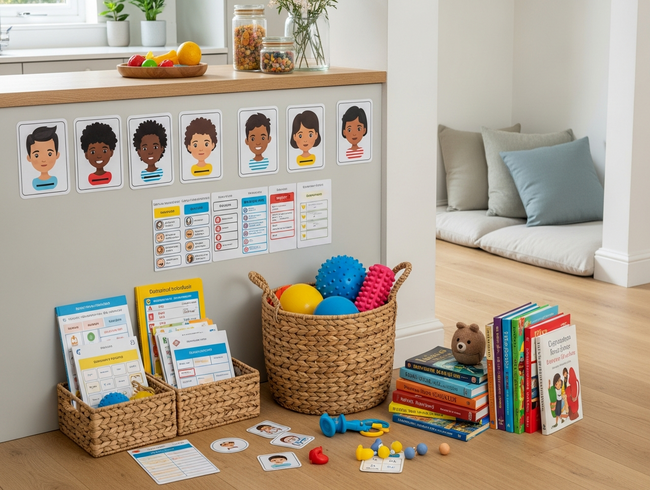
Design your physical space to support emotional learning through multiple sensory channels. This foundational step matters because environmental cues provide consistent emotional support, especially for children who process information differently or feel overwhelmed by traditional classroom-style setups.
Estimated time: 2-3 hours initial setup
Sub-tasks:
- Designate a calm corner with soft textures and dim lighting
- Display emotion visuals at your child’s eye level using pictures, not just words
- Include cultural emotion expressions that reflect your family’s background
- Create a sensory regulation basket with items your child finds soothing
- Position communication aids (cards, symbols, gestures) where they’re easily accessible
Pro Tip: Observe where your child naturally goes when upset or excited, then position emotional supports in those exact locations rather than where you think they should go.
Step 2: Implement Daily Emotion Check-ins Adapted to Your Child’s Communication Style
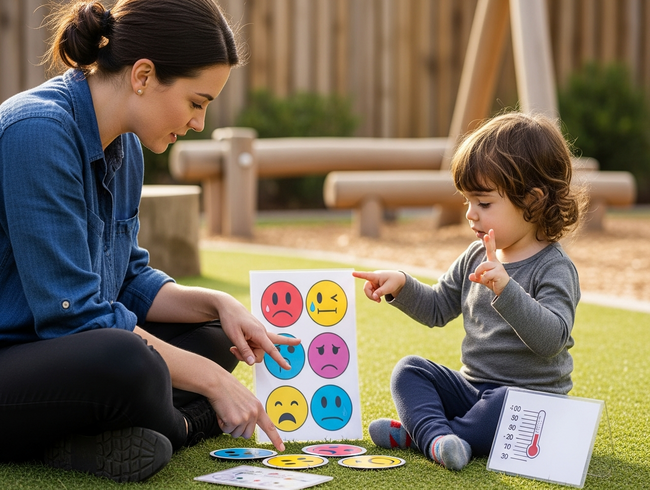
Implement routine emotion recognition moments that work whether your child communicates through words, gestures, art, or behaviour. Consistency builds emotional awareness as a natural habit and provides multiple low-pressure opportunities for practice.
Estimated time: 5 minutes, 3 times daily (morning, after lunch, bedtime)
Sub-tasks:
- Choose check-in times that align with your child’s natural rhythms
- Select communication methods that suit your child (pointing, drawing, body movements, sounds, words)
- Create visual supports like emotion thermometers or feeling faces
- Practice the routine with all family members first
- Allow flexibility in how your child responds each day
Common Mistake: Forcing verbal responses when your child naturally communicates through other methods. Instead, honour their preferred communication style and gradually expand options.
Step 3: Transform Storytelling Techniques for Diverse Learners
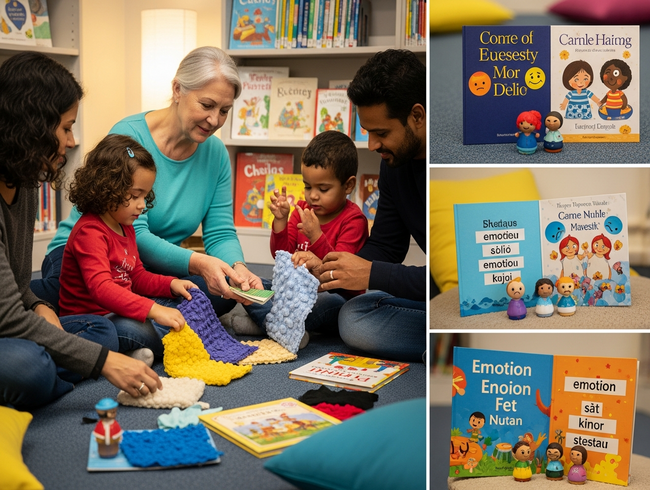
Transform your emotional storytelling using multiple modalities – visual props, tactile elements, home languages, and movement. Multi-modal approaches reach different learning styles and honour cultural backgrounds, making emotional concepts more accessible and meaningful.
Estimated time: 15-20 minutes per story session
Sub-tasks:
- Gather emotion-focused books representing diverse families and experiences
- Create tactile story props using different textures and materials
- Incorporate emotion words from your home language alongside English
- Add movement, gestures, or sensory elements to key emotional moments
- Let your child interact with props while you read
One of the key principles of inclusion is meeting children where they are, not where we expect them to be. Allow your child to engage with stories in their own way, whether that’s through movement, touching props, or making sounds.
Step 4: Integrate Emotional Vocabulary Through Everyday Moments
Integrate emotion narration into routine activities like meals, car rides, and bedtime. These authentic moments are powerful because they’re frequent, natural, and pressure-free learning opportunities that don’t require additional time commitments.
No additional time needed – embeds within existing routines
Sub-tasks:
- Practice mealtime emotion talk: “I notice you’re excited about these strawberries!”
- Build vocabulary during transitions: “It’s hard to feel disappointed when playtime ends”
- Process emotions at bedtime: “Tell me about a moment today when you felt proud”
- Observe and narrate outdoor play: “Your body shows me you’re feeling joyful as you run”
Common Mistake: Over-correcting your child’s emotion words instead of expanding on them. Instead of “No, that’s not angry, that’s frustrated,” try “Yes, angry feelings and frustrated feelings both make our bodies feel tight inside.”
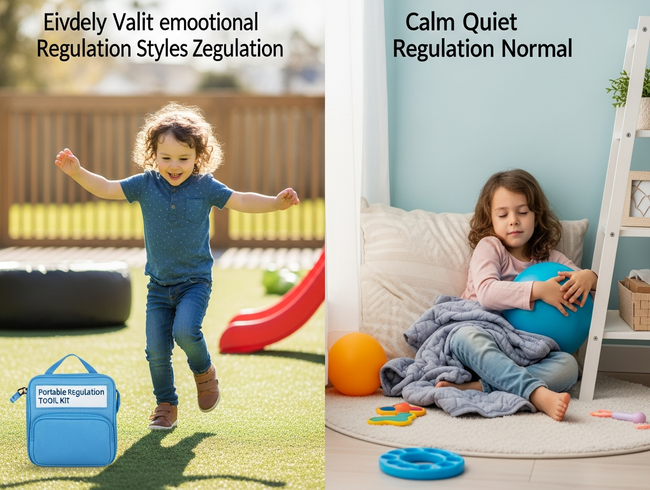
Step 5: Identify and Support Different Emotional Regulation Styles
Identify your child’s natural regulation patterns through observation, then provide appropriate supports that build on their strengths rather than fighting their instincts. Understanding individual styles prevents mislabelling behaviours as ‘problems’ and helps your child develop confidence in their emotional abilities.
Ongoing observation time needed
Sub-tasks:
- Observe regulation patterns for one week without intervening
- Match supports to your child’s natural style (movement, quiet space, sensory input, social connection)
- Create a portable regulation toolkit for outings
- Practice regulation strategies together during calm moments
- Document what works and what doesn’t for future reference
Pro Tip: All regulation styles are normal and healthy. A child who needs to run when excited isn’t wrong – they’re using their body’s wisdom to regulate their nervous system.
Common Mistakes to Avoid When Building Emotional Literacy
- Forcing emotional expression that doesn’t match your child’s style: Instead, offer multiple ways to share feelings and let your child choose their preferred method.
- Comparing your child’s progress to neurotypical developmental milestones: Instead, celebrate your child’s individual growth patterns and unique strengths.
- Dismissing cultural differences in emotional expression: Instead, incorporate your family’s cultural emotional wisdom alongside mainstream approaches.
- Overwhelming with too many emotion words at once: Instead, focus on 2-3 core emotions and build gradually from your child’s interests.
- Expecting immediate behaviour changes: Instead, understand that emotional literacy develops slowly and shows up differently for each child.
- Not modelling emotional literacy yourself: Instead, narrate your own emotions and regulation strategies so your child learns through observation.
Success: Recognising Progress and Your Next Steps
Successful emotional literacy looks different for every child. Your verbal child might use more sophisticated emotion words, while your non-verbal child might show clearer emotional expression through their preferred communication method. Some children will demonstrate better self-regulation, while others will show increased emotional connection with family members.
Progress timelines vary significantly. Some children show changes within weeks, while others need months or longer. Every child learns differently, and our goal is to create a flexible environment that honours that.
To learn more about our comprehensive approach to supporting every child’s unique emotional development journey, Book a Tour with True Maple Bilingual Early Learning Centre. Contact us today at 03 7504 3524 or email springvale@truemaple.com.au to discover how our inclusive, bilingual environment nurtures emotional literacy in children with diverse needs and learning styles.